@Space Challenge is a competition designed to advance AI × Space × Robotics technologies for future space activities in orbit, on the Moon, and on other planetary bodies.
@Space Challenge was established as a new category of RoboCup JapanOpen, a competition for autonomous robots. The first edition is based on a scenario using Int-Ball2, an ISS internal robot developed by JAXA.
Using the Int-Ball2 Gazebo simulator, teams compete on tasks such as autonomous navigation, manipulation, and cooperative operations, broadening participation in space robotics development through both education and research. From the second edition onward, the competition aims to expand toward the use of the actual Int-Ball2 aboard the ISS and establish a benchmark for autonomous space robots.
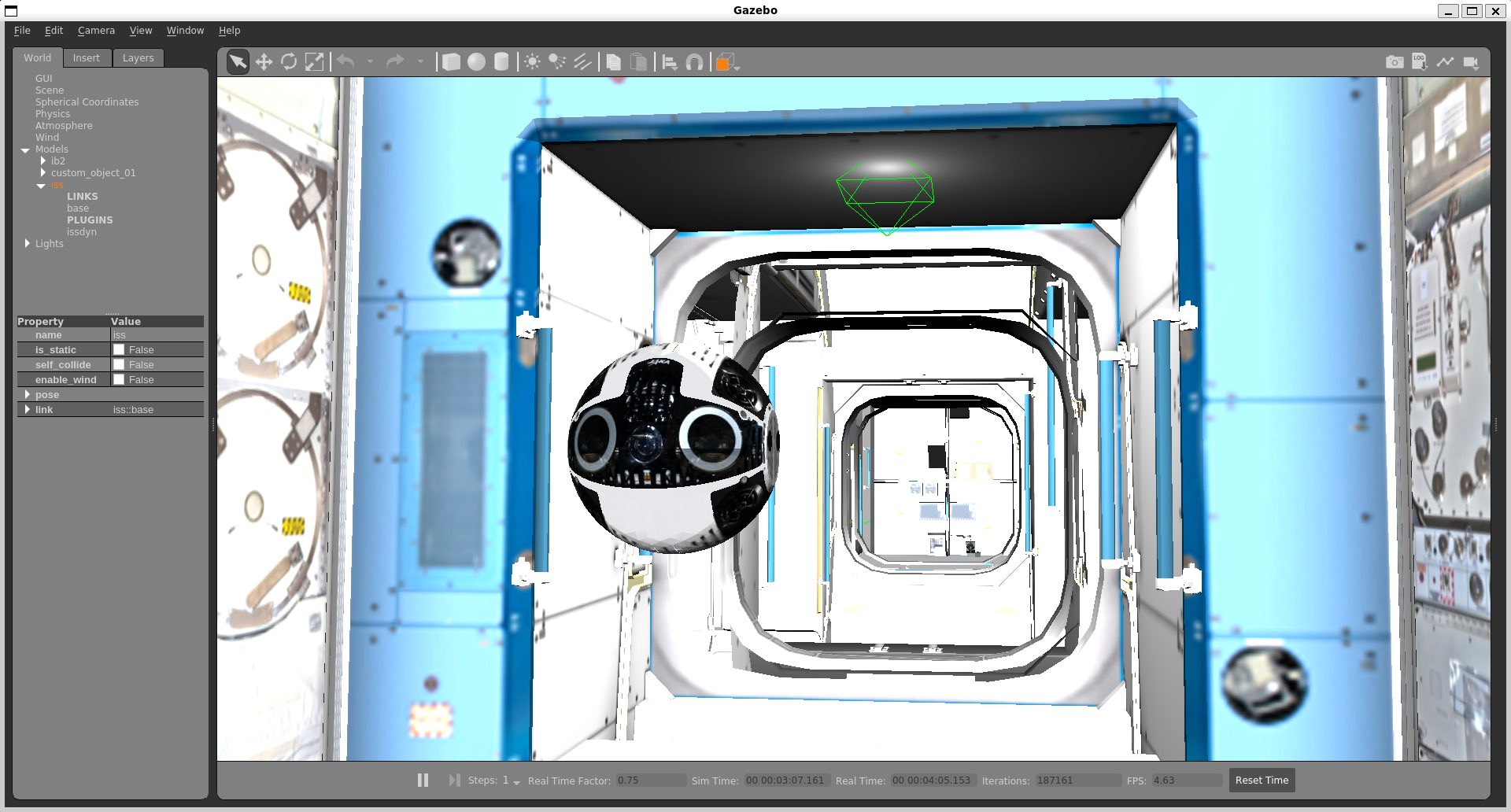
01 Int-Ball2 Gazebo simulation environment
COMMUNITY
Technical Community
A Discord server is available for sharing competition information, technical exchange, and collaborative development. Anyone may join, regardless of whether they participate in the competition.
The first edition includes the main competition, a technical exchange session, the Open Category (competition proposals and demonstrations), and an Exhibition.
MAIN TASK
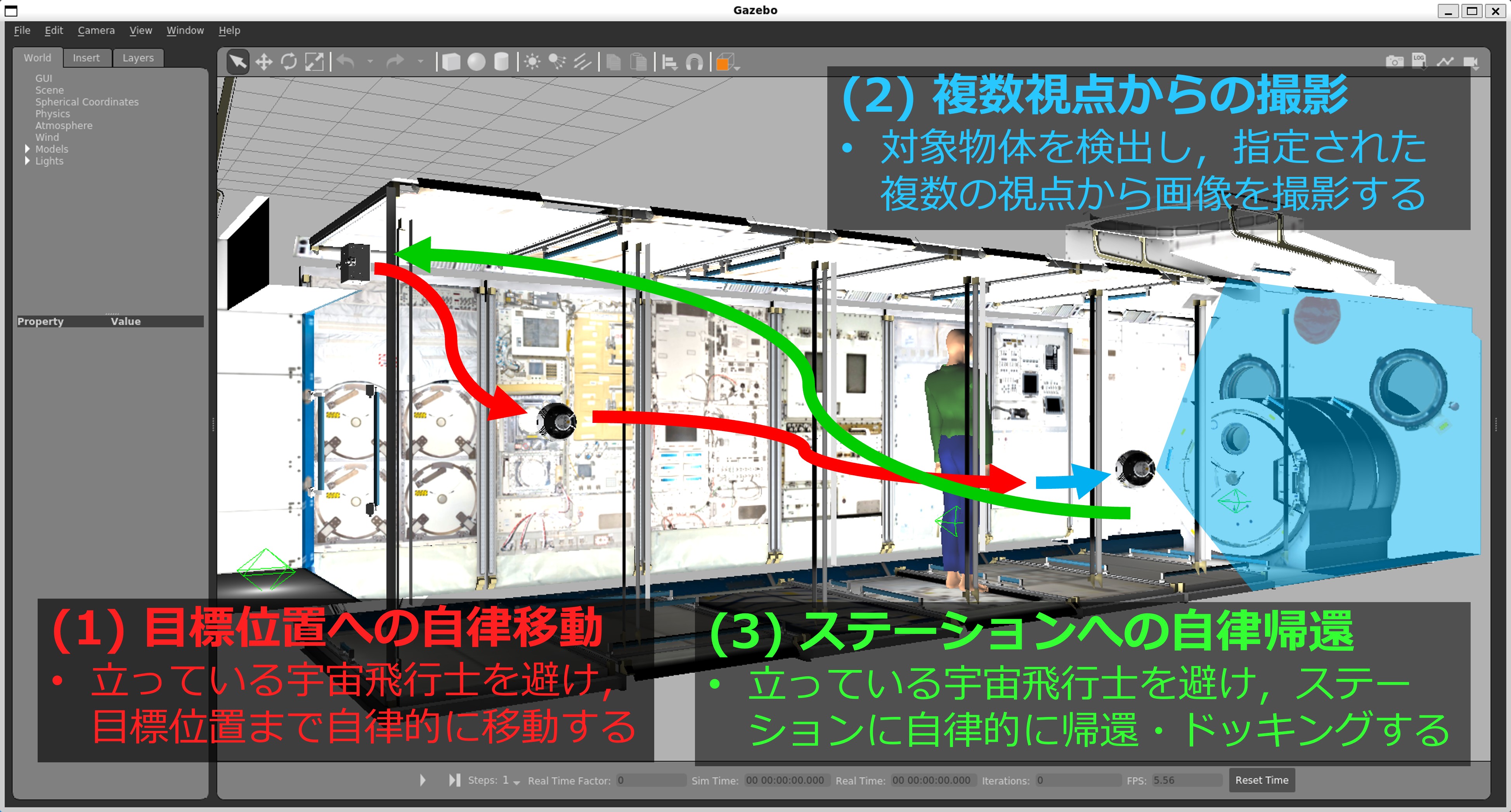
Autonomous Inspection and Verification Tasks inside a Space Station
01
Autonomous Navigation to the Target
Navigate autonomously from the docking station to the target while avoiding astronauts.
02
Multi-View Imaging
Detect the target object and capture images from multiple viewpoints while keeping the object centered in the frame.
03
Autonomous Return to the Station
Return while avoiding astronauts and dock autonomously with the docking station.
Teams share their technical approaches and research through posters and presentations, promoting information exchange and discussion among participants.
EXHIBITION
Exhibition
Interested teams give free-form presentations or demonstrations to showcase research outcomes and technologies under development.
OPEN CATEGORY
Competition Proposals & Demonstrations
Each team presents original ideas or research outcomes in a 10-minute presentation followed by a 5-minute Q&A session. RoboCup representatives evaluate the presentations, and outstanding entries are recognized.
OriginalityNovelty and uniqueness of the idea
Feasibility in SpaceCompatibility with environmental constraints and relevance to RoboCup
Social / Mission ImpactValue for space development and society
Demonstration Success & PersuasivenessVerifiability and reproducibility
PresentationCommunication quality and Q&A
03 / REGISTRATION
Registration
Participation in @Space Challenge requires two steps: preliminary registration and official JapanOpen registration.
STEP 01
Preliminary Registration
Submit the registration form to obtain a team number.
TIDBotsTokyo Information Design Professional University
OPEN CATEGORY
Open Category Awards
1
SOBITSSoka University
2
TIDBotsTokyo Information Design Professional University
RSJ AWARD
Robotics Society of Japan Award
@Space Challenge Executive Committee
“Competitive Bridging of Autonomous Space Robot Research toward the Transfer of Ground-Based Living-Support Robot Technologies to Space — Establishing the @Space Challenge Competition Platform to Promote Space Applications of Ground-Based AI Technologies —”
Detailed results, including scores and additional rankings, are available on the community Discord server.
06 / ORGANIZATION
Organization
Executive Committee
Executive Committee Chair Hiroyuki Okada (Tokyo Information Design Professional University)
Executive Committee Members (in no particular order)